


A Roman interior still open to the sky
Behind the Pantheon's columned portico lies a remarkable space: a circular hall whose height matches its diameter, approximately 43.3 meters.
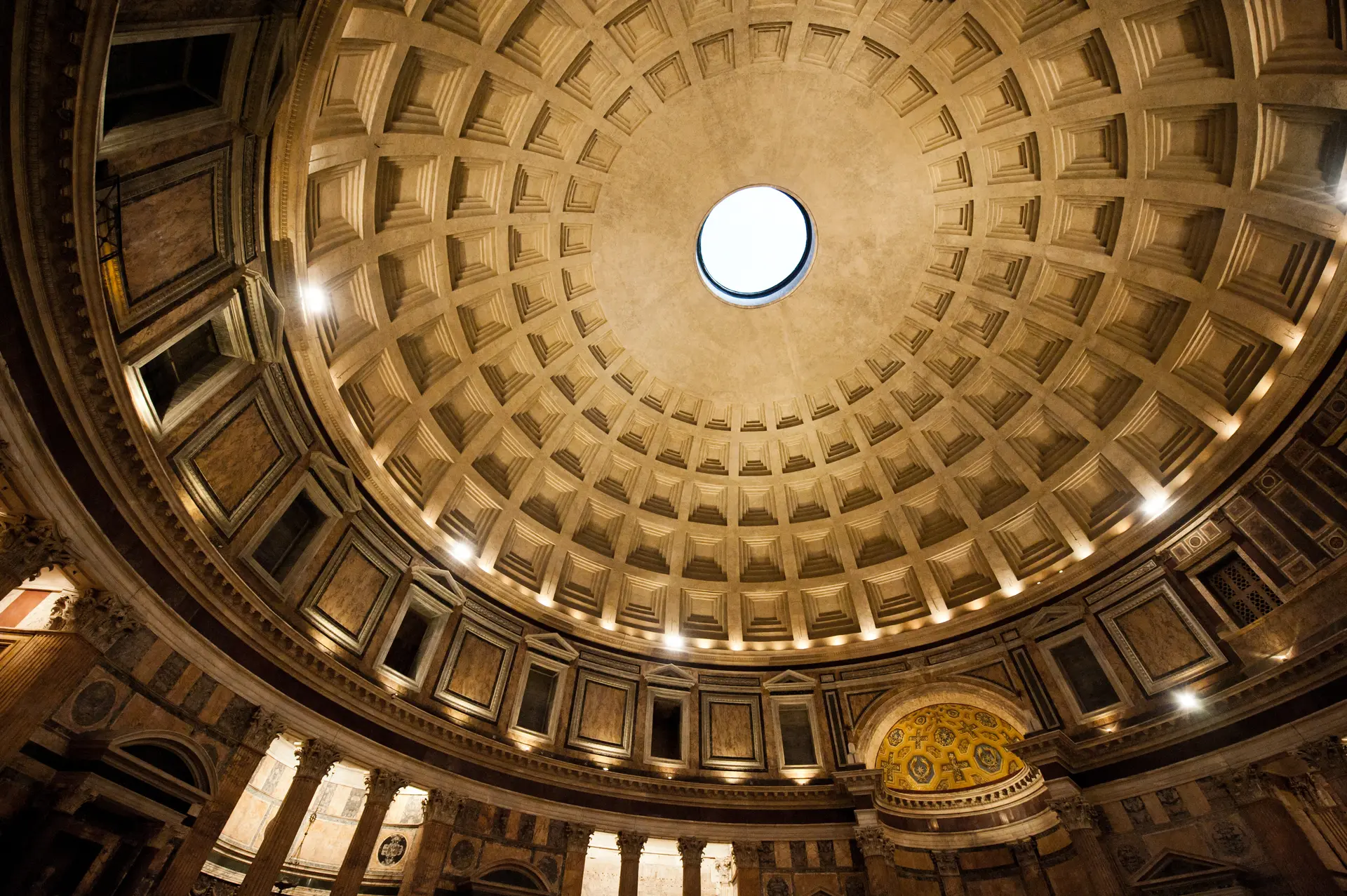
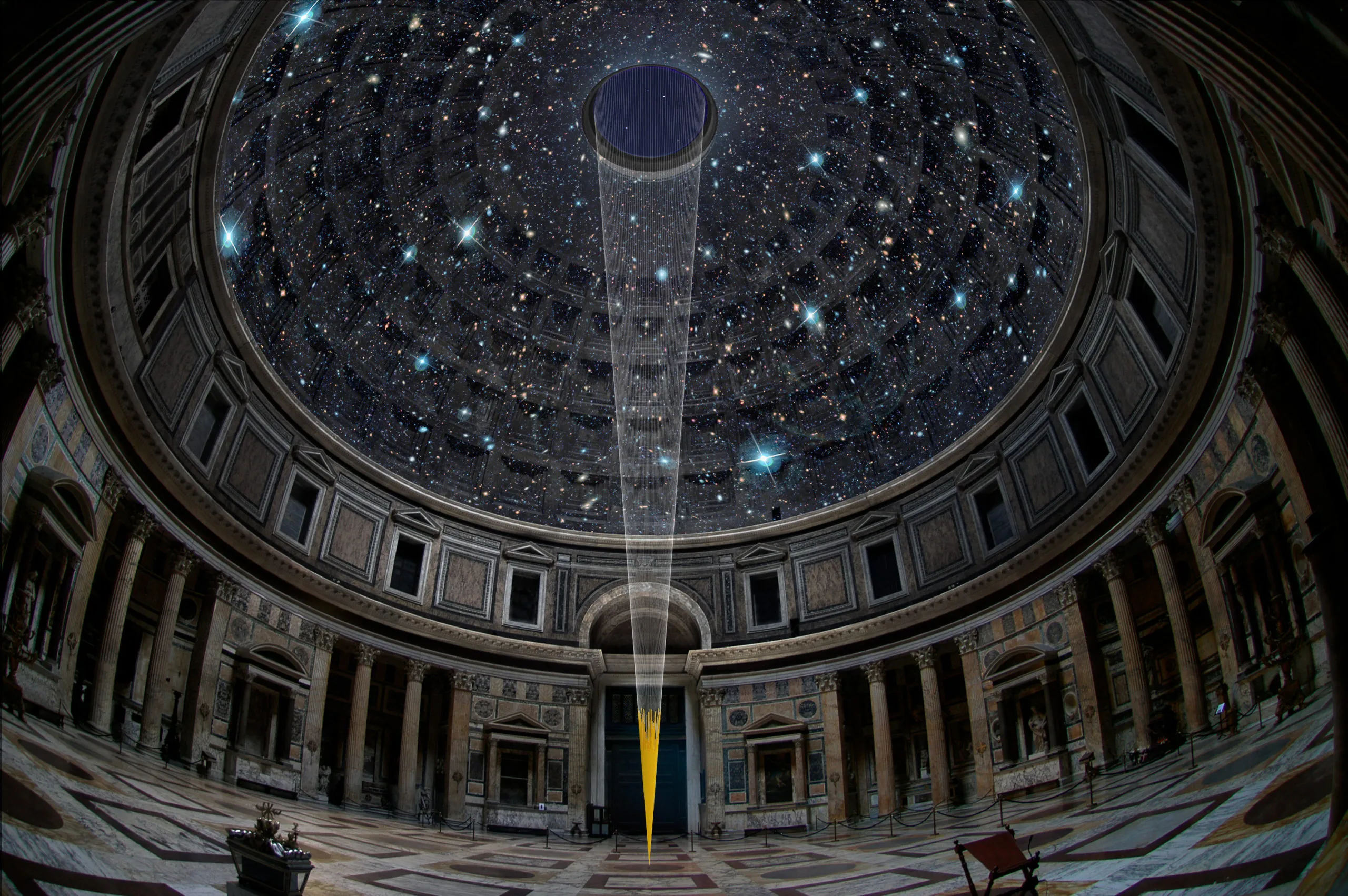
The immense concrete dome has no glass over its central opening, so sunlight moves across the interior and rain can fall onto the drained marble floor.
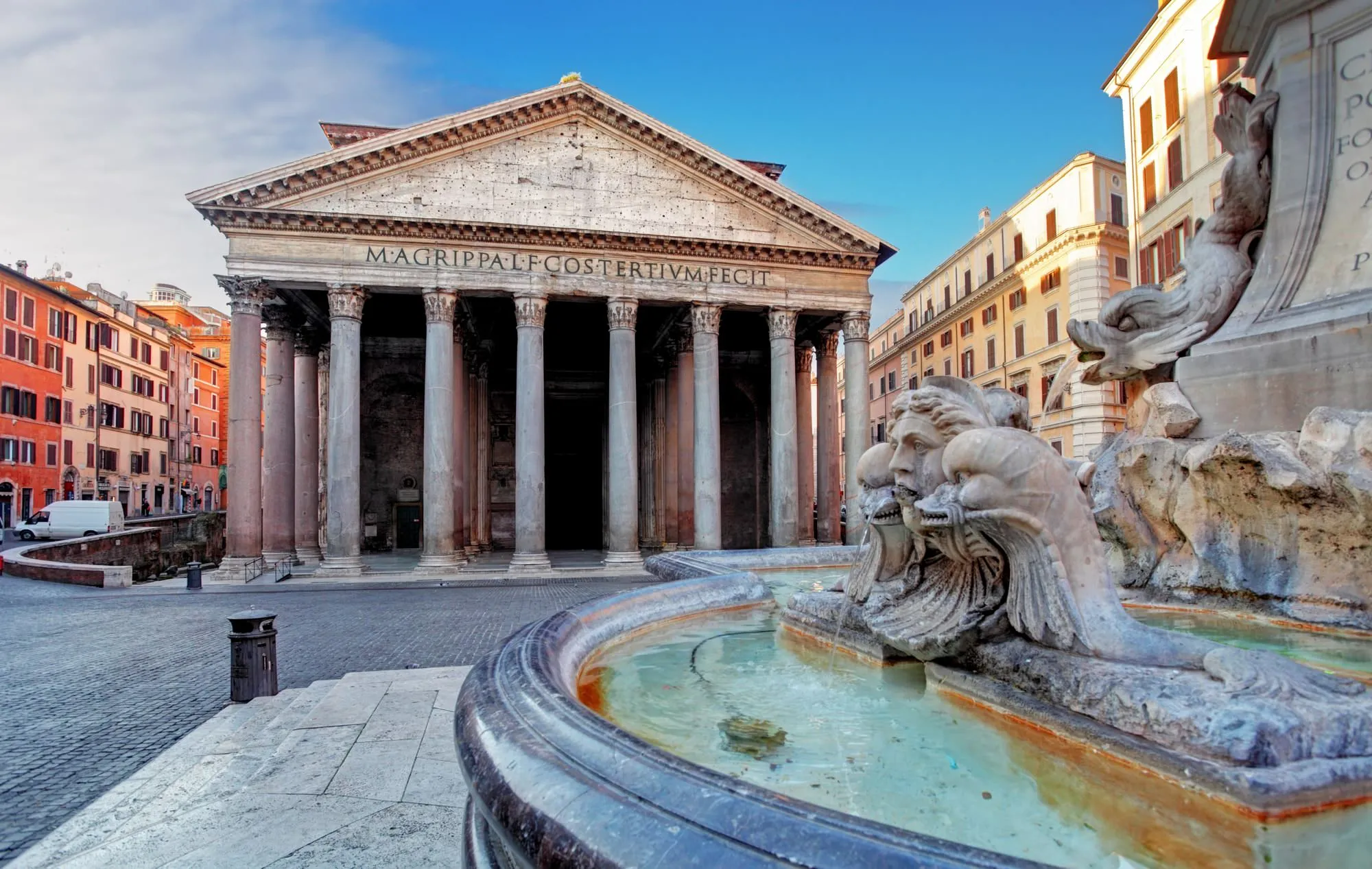
The present building dates principally to Emperor Hadrian's reign, although its facade honors the earlier founder, Marcus Agrippa.
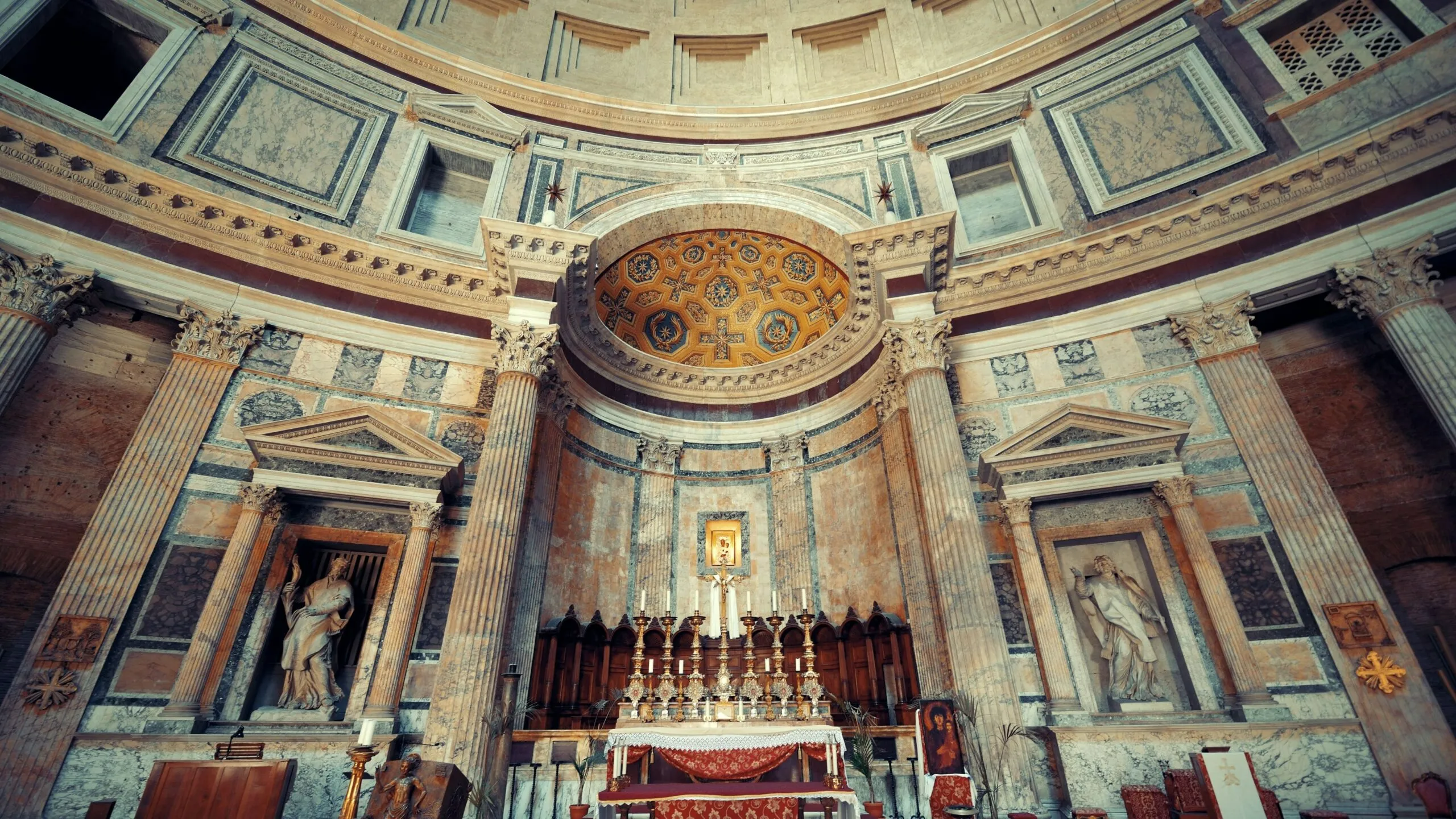
Consecrated as Santa Maria ad Martyres in 609, it remains a Catholic church and contains Raphael's tomb and memorials to Italy's monarchy.
A visit brings these different periods together in one rotunda, rather than a sequence of museum galleries.
Use this independent guide to understand the architecture, check visiting arrangements and distinguish basic admission from audio-guide and guided-tour packages..
Pantheon Rome Visiting timetable
Normally daily 9:00 am-7:00 pm; ticket office closes at 6:00 pm, individual last entry at 6:30 pm. Religious celebrations can change access.
Pantheon Rome Closing Days
Normally closed January 1 and December 25, unless an exceptional opening is announced. Check official notices for services and other changes.
Where is Located
Piazza della Rotonda, 00186 Rome, Italy
How to get to the Pantheon
The entrance faces Piazza della Rotonda in Rome's historic center, between the Piazza Navona and Via del Corso areas. Plan the final part of your journey on foot or arrange an accessible approach.
By Train
There is no railway station at the Pantheon. If arriving at Roma Termini, use onward public transport or a licensed taxi, then follow the pedestrian approach to Piazza della Rotonda. Check the current route before departure.
By Car
Central Rome has limited-traffic zones and restricted streets. Check Roma Mobilita's current ZTL rules before driving; do not assume a parking reservation permits access. Public transport or a taxi avoids the need to find parking near the square.
By Bus
Use the ATAC journey planner for a service toward the Corso Vittorio Emanuele II or Largo di Torre Argentina area, then walk to Piazza della Rotonda. Verify your stop and any diversions on the day.
On Foot
From Piazza Navona, head toward Corso del Rinascimento and continue through the historic-center streets to Piazza della Rotonda. From the Trevi Fountain, walk west across Via del Corso. Allow for cobbles and busy pedestrian streets.
What to look for inside the Pantheon
Three features explain its enduring appeal: the engineering of the dome, the monumental entrance, and the later lives recorded in its chapels and tombs.
Pantheon Rome
The dome and open oculus
Five rings of recessed coffers draw the eye toward an opening to the sky. Notice how the moving light reveals the curve of the concrete dome and changes the appearance of the interior.
The portico and Agrippa's inscription
Before entering, look up at the dedication to Marcus Agrippa. The inscription preserves the memory of the first founder even though the building behind it was reconstructed in the imperial period.
Raphael's tomb and the royal memorials
Follow the perimeter to find Raphael's burial place and the tombs of Italy's first two kings and Queen Margherita. They show how an ancient sacred building also became a place of artistic and national remembrance.
Get to know the Pantheon
Start with the building's identity, its most distinctive features and the essentials of visitor admission.
Compare Pantheon tickets and tours
Basic official admission covers entry to the monument. The partner listings add services such as digital audio, an official audio guide or a guided visit.
Check the total price and your chosen date with the seller. Online purchase does not guarantee immediate entry or exemption from entrance checks.